


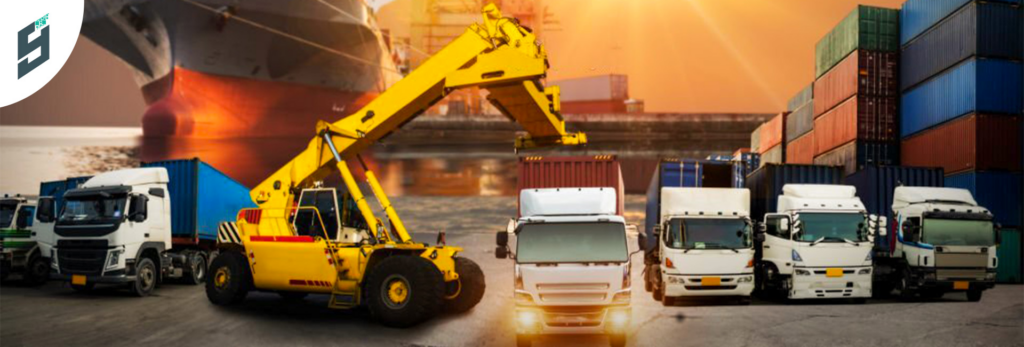
Land transportation plays an essential role in the freight forwarding process. Land transportation is the movement of goods by land, and it is used to transport goods over long distances, as well as within a city or region.
Table of Contents
It is a crucial part of the supply chain, as it helps to ensure the safe and timely delivery of goods to their destination. In the freight forwarding process, land transportation is used to move goods from city to city, state to state, & country to country if they are connected by land.
Because ships can only get to seaports and aircraft can only get to airports, every package transported to any country from ocean or air freight requires land transportation at some point, therefore we can also say that every parcel shipped to every country uses land transportation at some point. This might include using trucks, trains, or other modes of transportation.
Transportation is an important part of modern life, and land transportation is no exception. From cars and buses to trains and trolleys, there are many different types of land transportation available. Each type of transportation has its own unique advantages and drawbacks, so it is important to consider which type is best for your particular needs.
Types of Land Transportation Services
The most common type of land transportation services includes trucking, rail, and intermodal.
1. Trucking
Trucking is the most widely used method for domestic and international shipping. This method offers flexibility in terms of route planning and managing the goods throughout the journey. It also allows for fast delivery times with door-to-door service.
2. Rail Freight
Rail freight is used for large-scale or high-volume cargo movement and offers cost savings over trucking services. This option also allows companies to move goods from one place to another in a short span of time as well as provides flexibility in terms of route planning.
3. Intermodal Freight
Intermodal freight includes the use of multiple modes of transport such as road, rail, and sea to deliver goods. This type of freight forwarding is cost-effective and allows for faster transit times.
4. Specialized Services
Specialized services like refrigerated transport, flatbeds, oversized loads, and hazardous cargo can also be used depending on the requirement. Refrigerated transportation requires special attention to temperature control while specialized trailers like lowboys and step-decks are needed for oversized loads. Hazardous cargo requires special containers that meet regulatory requirements and need to be handled with utmost care.
Truckload (TL) and less-than-truckload (LTL) services
- LTL shipments
LTL shipments ( Less than Truck Load) are moved as a consolidation (also called Groupage) means that a lot of different packages from different shippers are consolidated in a single package. This is mainly efficient for domestic and international land freight shipments that are smaller in size one or few pallets only.
- Truckload
Truckload (TL) is the most cost-effective and reliable way to move full truckloads of freight. TL shipments are transported without having to consolidate or break down with other cargo, ensuring that they reach their destination safely and on time.
Specialized Land Transportation Services (e.g. Hazardous Materials, Temperature-Controlled)
Transporting hazardous materials require special permits, containers, and safety protocols. Freight forwarders must ensure that the necessary documents are obtained from shippers and carriers in order to comply with local regulations.
Temperature-controlled shipments require specific expertise and knowledge such as temperature monitoring and various types of packaging for sensitive goods like perishable food products or pharmaceuticals. Freight forwarders must have the necessary knowledge to ensure that goods are transported safely and securely while maintaining the required temperature levels throughout their journey.
Drayage and local delivery services
Drayage is the movement of cargo from a port or rail station to a warehouse or other location. This service allows freight forwarders to move cargo directly from a loading dock, eliminating the need for additional handling and storage costs.
Local delivery services are used for short-distance shipping requirements such as within the same city. These services are cost-effective and reliable for smaller cargo that needs to be moved over a short distance.
Choosing the Right Land Transportation Service for Your Need
Assessing your Land Transportation Needs & Goals
Before selecting a land transportation service provider, it is important to assess your needs and goals, some questions you might ask from you include,
Do you need local or long-distance transportation? What type of cargo are you shipping? How often do you need to transport goods? Understanding your specific needs will help ensure that you select the right service provider for your business.
Once you have identified your needs, it is time to evaluate potential providers. When selecting land transportation services, you should consider factors such as the provider’s reliability, expertise in providing the type of shipping service you need, and cost-effectiveness. The provider should also be able to provide safe and timely transport of goods.
Ground transportation gives us the possibility to track the merchandise in real-time and have a better idea about the delivery times.
Researching & Comparing Different Service Providers
It is the key to finding a reliable and cost-effective provider. You may also want to consult with other companies in your industry to see who they use for their land transportation needs. They can provide valuable insights into the services offered by different providers and help you narrow down your choices.
By selecting the right service provider, you can ensure that your goods are transported safely and on time. You will also be able to take advantage of cost savings, as well as specialized services such as hazardous material shipping and temperature-controlled shipments. With the help of a reliable land transportation service provider, you can rest assured that your cargo will reach its destination without any issues.
Negotiating Rates and Services
Once you have identified a few potential providers, it is time to negotiate rates and services. Be sure to ask for discounts or other incentives, such as faster shipping times or additional services. You should also consider any additional charges that may apply, such as taxes and handling fees. Negotiating with the provider can help you get the best rate for your business.
Evaluating Performance & Measuring Results
Once the service provider is selected, it is important to evaluate its performance. Regularly review shipment data and delivery times to ensure that the transportation service meets your needs. The provider should also be able to provide feedback on any issues or opportunities for improvement. Measuring results helps you ensure that you are getting the best value from your land transportation service provider.
Finally, remember that selecting the right provider is only the first step in providing reliable and cost-effective land transportation services for your business. Staying up to date on trends in the industry and staying in contact with your service provider can ensure that you are getting the most out of your shipping solutions. With a bit of research and negotiation, you can find the right provider to meet your needs and exceed your expectations.
It will help you make sure that your goods reach their destination on time and in perfect condition. By selecting the right land transportation service, you can save money, reduce stress, and ensure a successful shipping experience for yourself and your customers. And with the help of a reliable provider, you can be confident that your cargo will arrive safely and on time. No matter what type of goods you need to ship, a reliable land transportation service can help get it there without any issues.
By researching and comparing providers, negotiating rates and services, evaluating performance, and measuring results, you can make sure that your business is getting the best possible shipping solution. So, own your choices and select the right provider for your business needs. The right land transportation service can make all the difference.
The Future Outlook & the Evolving Role of Land Transportation Services
The future of the industry is promising. Companies are increasingly recognizing the value of land transportation services and are investing in technology, data, and analytics to improve their supply chains.
Additionally, new regulations and initiatives such as truck platooning, autonomous driving, and even drone deliveries will all play a role in transforming the way companies use land transportation services in the future. As these technologies become more advanced, land transportation services will continue to evolve and become more efficient, cost-effective, and reliable for businesses.
Overall, land transportation is an integral part of any business’s supply chain and can be optimized with the right provider, technology applications, and data analysis.
Use Global Shopaholics for all your shopping and shipping needs. and deliver your freight at a faster and more economical rate than usual.